How to Start Selling Handmade Products (Without Making It More Complicated Than It Needs to Be)
Thinking about turning your craft or hobby into a small business?
Whether you make pottery, jewelry, crochet projects, woodworking pieces, yoga accessories, or another handmade product, getting started can feel overwhelming. Where do you sell? How do you ship orders? Do you need a business license? What about sales tax?
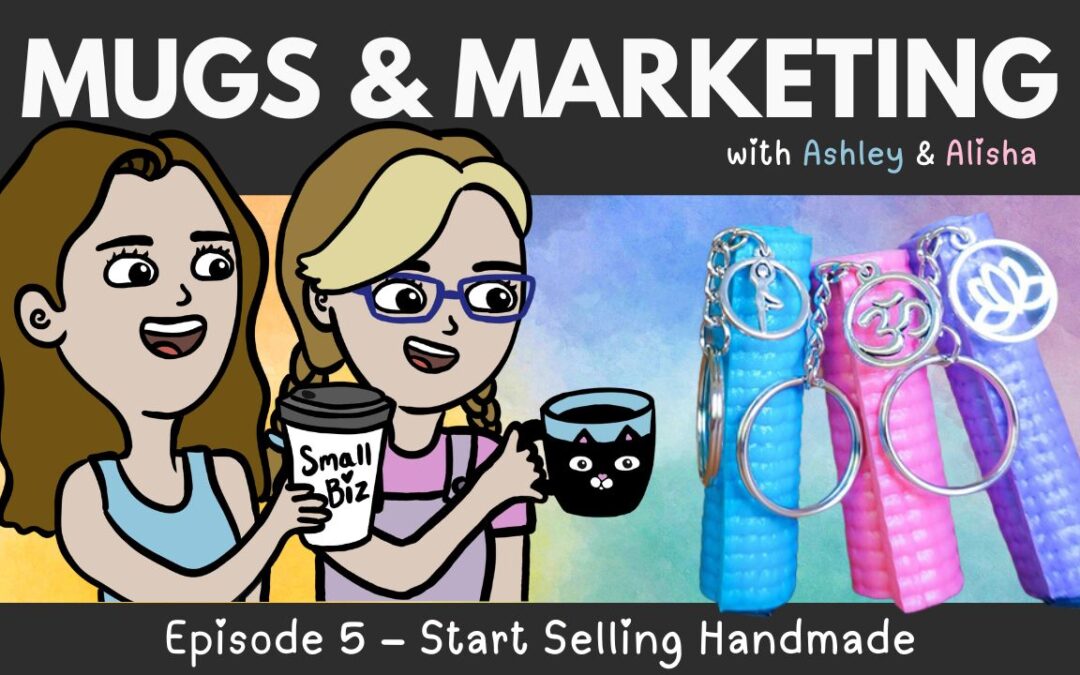
In this episode of Mugs & Marketing, Ashley and Alisha break down what they’ve learned from their own experiences selling physical products—one as a full-time pottery artist and the other as a yoga teacher who unexpectedly found herself selling handmade yoga mat keychains.
The good news? You don’t need to have everything figured out before you start.
Ashley’s Accidental Product Business
Years ago, Ashley started making yoga mat keychains as small gifts for her yoga students. Before long, people wanted to buy them.
She opened an Etsy shop, sold them online, and even had customers requesting wholesale orders.
Eventually, though, she realized something important:
Just because something is profitable doesn’t mean it’s the business you want to build.
Selling physical products took time away from the coaching, teaching, and digital education she loved most.
Instead of growing a product business, Ashley created a tutorial so other people could make the keychains themselves.
Sometimes saying “no” to one opportunity creates room for a better one.
Why Etsy Is a Great Place to Start
If you’re new to selling handmade products, Etsy is often one of the easiest places to begin.
Benefits include:
- Built-in marketplace and search traffic
- Sales tax collection (in many locations)
- Integrated shipping labels
- Easy product listings
- Low upfront investment
As your business grows, you may eventually decide to add your own ecommerce website alongside Etsy.
Shipping Doesn’t Have to Be Complicated
One of Ashley’s biggest mistakes?
Standing in line at the post office with every order.
Alisha shares a much easier workflow:
- Print shipping labels at home
- Use a kitchen or postal scale to weigh packages
- Purchase discounted labels online
- Drop packages off without waiting in line
- Schedule USPS pickups when available
Small systems like these can save hours every month.
Research Before You Scale
One of the biggest themes from this episode is understanding the business side before your hobby becomes a full-time business.
Every state and country has different rules around:
- Sales tax
- Business licenses
- Income reporting
- Physical product sales
It’s worth spending a little time learning your local requirements so you can build your business with confidence.
You Don’t Have to Know Everything on Day One
One thing Ashley and Alisha both agree on is that almost every creative entrepreneur starts by figuring things out as they go.
Your first craft fair probably won’t be perfect.
Your first Etsy listing won’t be perfect.
Your first shipping label might even be printed upside down.
That’s okay.
The important part is getting started, learning, and improving over time.
Resources Mentioned
-
Ashley’s Yoga Mat Keychain Tutorial
https://www.youtube.com/watch?v=amlHtshW1Y8 -
Pirate Ship
https://www.pirateship.com/ -
USPS Click-N-Ship
https://www.usps.com/ship/welcome.htm -
Big Cartel
https://www.bigcartel.com/ -
Digital Product Download
https://getdpd.com/ - Shopify
https://shopify.com
In This Episode
- Ashley’s experience selling yoga mat keychains
- Choosing between Etsy and your own website
- Shipping products without spending hours at the post office
- Understanding sales tax basics
- Product photography tips
- Wholesale requests and knowing your limits
- When to move beyond Etsy
- Helpful shipping tools and resources
- Advice for first-time handmade business owners
If you’ve been thinking about selling your handmade creations, this episode will give you an honest look at what it takes to get started—and remind you that you don’t have to have everything figured out before you begin.